
BIG News: PM Shehbaz Electricity Tariff Relief Package 2026 – Industrial Cut, BISP Subsidy & Solar Scheme
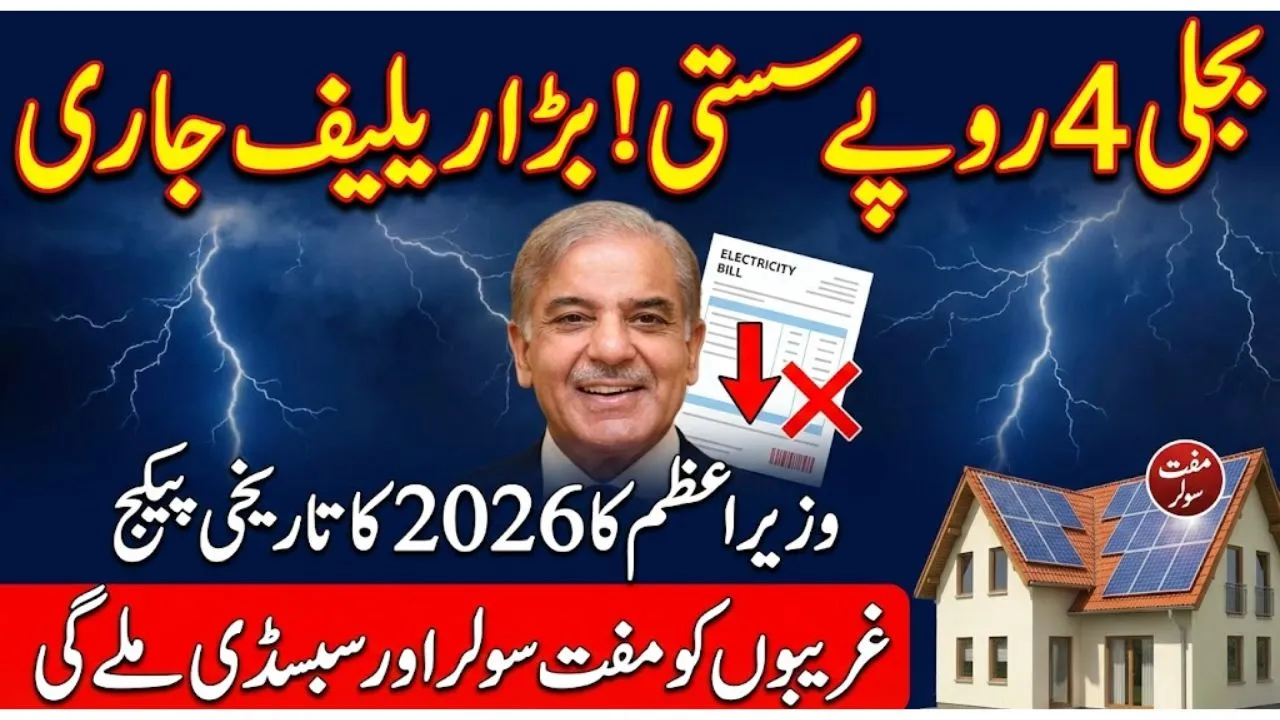
Pakistan’s energy sector received a major boost after Prime Minister Shehbaz Sharif announced the Electricity Tariff Relief Package 2026. The relief package, unveiled on January 30, 2026, mainly targets industrial and export sectors to improve production capacity, reduce manufacturing costs, and strengthen Pakistan’s position in global markets.
Alongside industrial relief, the government has also introduced supportive measures for domestic and low-income households through BISP electricity subsidy programs and solar energy schemes. This move is being seen as a significant step toward economic stabilization and energy affordability.
Key Highlights of PM Shehbaz Electricity Relief Package 2026
The government’s new package includes tariff cuts, financing relief, and subsidy programs for different sectors.
| Feature | Details |
| Industrial Tariff Reduction | Rs. 4.04 per unit |
| Wheeling Charges | Reduced to below Rs. 9 per unit |
| Cross-Subsidy Removal | Rs. 8.90 per unit eliminated |
| Export Refinance Scheme | Interest reduced from 7.5% to 4.5% |
| BISP Electricity Subsidy | For families earning below Rs. 50,000 |
| Free Solar Scheme | For 50–300 units electricity users |
| National Average Tariff | Rs. 33.38 per unit |
Industrial Electricity Tariff Relief 2026 – Major Reduction for Manufacturers
The biggest focus of the relief package is the industrial sector, which plays a crucial role in Pakistan’s exports and economic growth.
Rs. 4.04 Per Unit Electricity Reduction
 WhatsApp Channel
The government has reduced electricity prices for industrial consumers by Rs. 4.04 per unit. This reduction is expected to:
- Lower manufacturing costs
- Improve export competitiveness
- Increase industrial production
- Create employment opportunities
Industrial stakeholders have welcomed the decision, stating that electricity costs were among the biggest hurdles in maintaining profit margins.
Wheeling Charges Reduction – Support for Industrial Expansion
Another important step is the reduction in wheeling charges, which have been brought below Rs. 9 per unit.
What Are Wheeling Charges?
Wheeling charges are fees industries pay when transferring electricity from one power generation source to another location.
Benefits of Reduced Wheeling Charges
- Easier electricity transfer between industrial units
- Encouragement for private power generation
- Increased operational flexibility for industries
- Reduced production costs
This decision is expected to support industries using captive or renewable energy systems.
Cross-Subsidy Removal – Major Financial Relief
Previously, industries paid approximately Rs. 8.90 per unit as cross-subsidy charges. The government has now removed this component entirely.
Why Cross-Subsidy Removal Matters
- Industries no longer bear extra cost burden
- Electricity pricing becomes more transparent
- Encourages industrial growth and investment
- Helps exporters compete in international markets
Experts believe this step could significantly improve Pakistan’s export sector performance.
Export Refinance Scheme 2026 – Cheaper Loans for Exporter
To further support exporters, the government has reduced the Export Refinance Scheme (ERS) interest rate from 7.5% to 4.5%.
Benefits for Export Sector
- Cheaper working capital
- Improved cash flow for exporters
- Higher production and export volume
- Strengthened foreign exchange earnings
Additionally, the government has announced symbolic incentives for leading exporters, including:
- Blue Passport facility
- Ambassador-at-Large status for two years
These incentives aim to recognize and support Pakistan’s top-performing exporters.
BISP Electricity Subsidy 2026 – Relief for Low-Income Families
Apart from industrial support, the government has introduced targeted electricity subsidies under the Benazir Income Support Program (BISP).
Who Is Eligible?
Families meeting the following criteria can benefit:
- Monthly household income below Rs. 50,000
- Registered under BISP or Ehsaas programs
- Valid CNIC verification
How to Check BISP Electricity Subsidy Status
Eligible families can check their subsidy eligibility through the official 8171 service.
Step-by-Step Method
- Open mobile SMS option
- Type your CNIC number without dashes
- Send SMS to 8171
- Receive confirmation message regarding eligibility
This targeted subsidy aims to reduce electricity bills for financially vulnerable households.
Punjab Free Solar Panel Scheme 2026 – Alternative Energy Support
The Punjab government has also launched the Free Solar Panel Scheme 2026 to reduce dependency on conventional electricity.
Who Can Apply?
Households consuming between 50 and 300 electricity units per month are eligible.
Benefits of Solar Scheme
- Reduced monthly electricity bills
- Long-term energy independence
- Promotion of renewable energy
- Environmental protection
This program is expected to reduce pressure on the national grid while helping middle and low-income households.
National Average Electricity Tariff Update 2026
According to NEPRA’s latest determination, the national average electricity tariff has been set at Rs. 33.38 per unit.
This reflects a slight reduction compared to previous projections and aligns with the government’s strategy to gradually lower electricity prices.
Economic Context Behind the Relief Package
Prime Minister Shehbaz Sharif stated that the government initially aimed for a larger tariff reduction of up to Rs. 10 per unit, but financial constraints and IMF commitments limited the current relief level.
However, the government highlighted several economic improvements that made this package possible:
- Inflation reduced to single digits
- Policy interest rate maintained at 10.5%
- Improved foreign exchange reserves
- Stabilization of energy sector finances
The relief package is part of Pakistan’s broader strategy to achieve export-led economic growth.
Expected Impact of Electricity Relief Package 2026
Industrial Sector Impact
- Lower production costs
- Increased exports
- Job creation
- Improved investor confidence
Domestic Consumer Impact
- Targeted subsidies for low-income families
- Reduced electricity bills through solar adoption
- Greater financial relief through BISP support
Government’s Future Energy Plans
Officials have hinted at additional reforms in the power sector, including:
- Expansion of renewable energy projects
- Further tariff rationalization
- Improvement in electricity distribution efficiency
- Reduction of circular debt
These measures aim to ensure long-term stability in Pakistan’s energy market.
Conclusion
The PM Shehbaz Electricity Tariff Relief Package 2026 represents a significant step toward strengthening Pakistan’s industrial growth and providing relief to low-income households. By reducing electricity tariffs, lowering financing costs for exporters, and expanding renewable energy initiatives, the government aims to improve economic competitiveness and ensure sustainable energy affordability.
While fiscal limitations prevented deeper tariff cuts, the current package is expected to support economic stability and boost export-driven growth in Pakistan.